Design & BrandingMarch 31, 20262 min read

Find your Designer

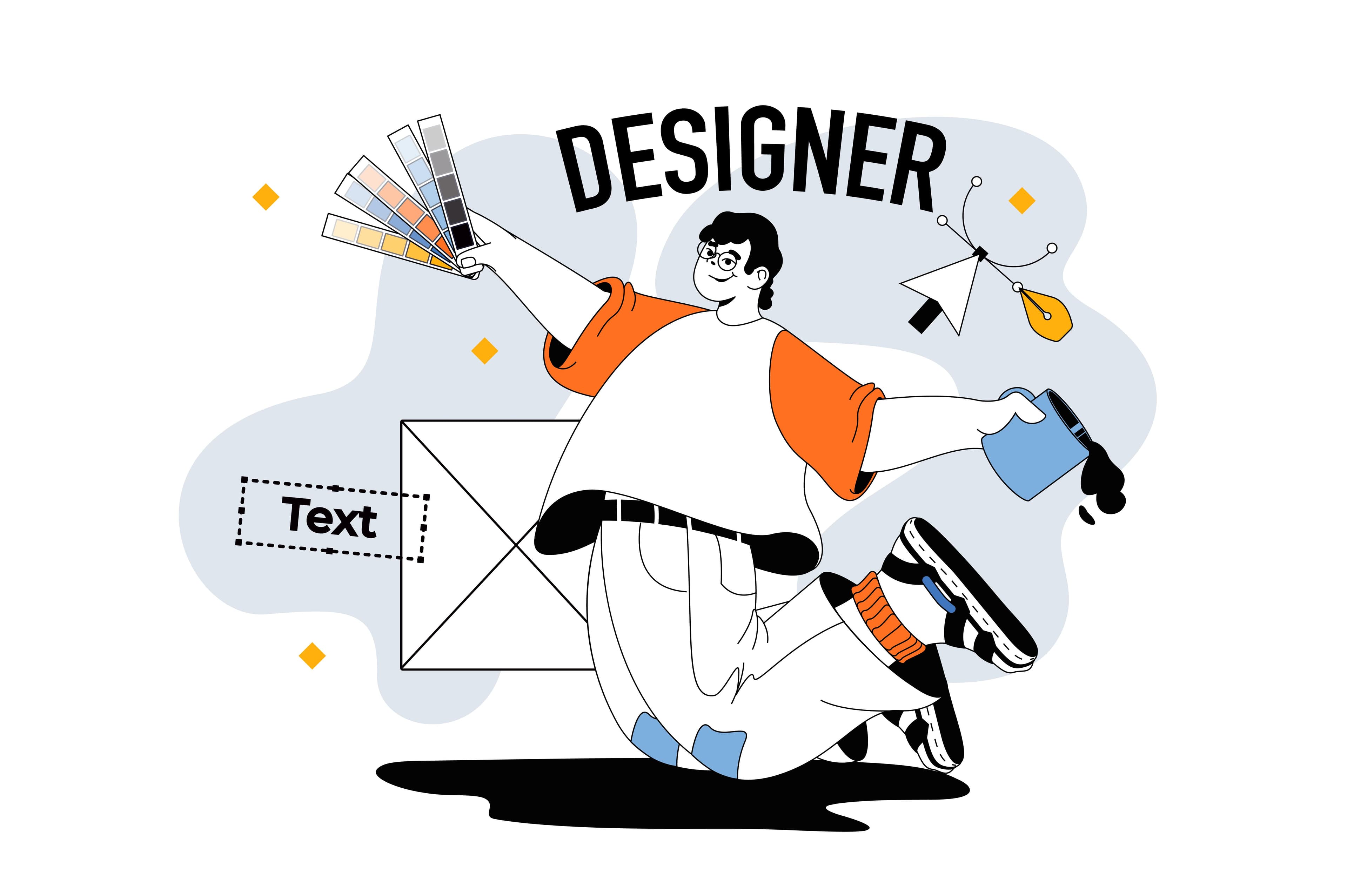
Find your designer topic featured image showing an illustration of an designer.

Design is personal and unique to each brand and its customers. Every brand is unique, and so are their design requirements.

Every brand manager, entrepreneur, or founder tries to find a designer who fits their imaginary aesthetic of what they want to produce for their business. In which case, they are right, but they are not doing enough. Yes, you have to find the designer whose work vibes with your style of imagination.

Every designer's way of designing things is very different from others. Some do very good minimalism and poster designs, some sketch really well, some design brands, their mockups and logos really well.

Not every designer is a perfect fit to do all kinds of tasks and design types. Finding the right designer based on their portfolio and assigning tasks accordingly will definitely yield results closer to what the founders or brand managers expect.

Expecting everything for cheap will result in cheaper outcomes 99% of the time.

Something out of the box, something unique, something personal always comes from a lot of things put together. Design is not pure art. It is a science in itself. Many times, design is just static, meant to deliver information to the end consumer, but in a few cases where the brand needs to stand out, some kind of personal connect is required.

Some sketching, illustration, custom design work, personal inputs, effects, and research are required from both the brand's and the designer's side as well. This consumes a lot of time, research, and resources, which also means that the investment required to fulfill such demands is essential.

Brands need to understand that it is a one-time investment. Once the design fits in, you are good to go. You scale in no time. The design hand holds your business and takes it forward. Do not underestimate it.

Many brands prefer budget over going for something unique and premium. They are not completely wrong either. Maybe they do not require more than they expected. In that case, a generic design could also do the work. DIY platforms like Canva and Adobe Express can fulfill such needs in a very nice way.

Every step taken toward making the brand stand out plays a great role in crafting the design. The aesthetics, the brand's internal mindset, team, interiors, products, and experience all play a great role in crafting a truly immersive digital experience.

Digital is nothing but a mirror reflection of your physical brand. So, make it count this time.

Published: March 31, 2026

Last updated: 2026-05-27

Design & BrandingDesigner

Keep Reading

More from BrandMen Studio

Why Smart Brands Are Leaving Screens Behind in 2026
Design & BrandingJune 24, 2026

Why Smart Brands Are Leaving Screens Behind in 2026

Consumers are tuning out AI-generated content at an accelerating rate. A recent Digiday report confirms that major brands are shifting serious money into experiential marketing. The reason is straightforward. Audiences are exhausted by the endless stream of generic, automated content flooding every platform they use. They want something tangible. Something they can walk into, touch, or share with friends in person. The Real World Is the New Competitive Advantage Digital advertising is not vanishing. But its power to break through the clutter has dropped dramatically. The brands gaining ground right now are the ones designing physical moments people actually remember. Pop-up shops, immersive installations, and live branded gatherings build loyalty that no banner ad can replicate. Even AI-native startups are now leasing retail space to earn trust through face-to-face connection. This is not a niche experiment. It is a structural shift in how consumers evaluate which brands deserve their attention and loyalty. This trend rewards companies that treat every interaction as a storytelling opportunity, not a transaction. What This Means for Your Business You do not need a festival-sized budget to create impact. You need a sharp, unified brand identity first. When your visuals, voice, and values align, even a modest activation feels deliberate and premium. Too many businesses chase trends without a foundation. That leads to scattered visuals, mixed messaging, and wasted spend. That is where the right creative partner changes the game. Branding, spatial design, and digital touchpoints must function as one system. The smartest founders we work with understand that brand strategy comes before tactics. Always. A pop-up loses power if the website feels disconnected. An event falls flat without a tight follow-up email sequence. Every touchpoint either strengthens your story or weakens it. There is no neutral ground in a crowded market. At BrandMen Studio, we help founders build that connected ecosystem spanning identity, experience design, web, and retention marketing. The brands investing in offline moments today are the ones customers will remember long after the AI hype cycle settles.

Read article
What Happens When Your Brand Gets Its Own AI Model
Design & BrandingJune 22, 2026

What Happens When Your Brand Gets Its Own AI Model

Adobe just released Firefly Foundry, a platform that lets businesses build private generative AI models trained exclusively on their own brand assets, logos, fonts, colors, and campaign history. This is not another generic image generator. It is a custom AI designer that internalizes your brand guidelines and produces work that actually looks like you. The end of off-brand AI output Until now, feeding a prompt into an AI image tool meant crossing your fingers. You might get something beautiful. You might get something that ignores your palette entirely. Firefly Foundry flips that. The model learns from proprietary brand data. Every output references the visual language you have already spent years building. For large enterprises, this means dozens of regional teams can generate locally relevant assets that never drift from the global identity. The hidden requirement most brands will overlook Here is the catch. You can only train an AI on what exists. If your brand guidelines are scattered across old PDFs, inconsistent Canva templates, and a folder called "final_final_v3," the AI will learn chaos. A custom AI model rewards brands that have done the disciplined work, a clear design system, documented typography rules, consistent spacing logic, and a real color hierarchy. This is where a creative agency becomes essential. Before you can scale with AI, someone needs to audit your brand, tighten the system, and structure it in a way a machine can understand. At BrandMen Studio, we see this as the new baseline. A brand identity project today must be built with AI-readiness in mind. That means clean component libraries, tokenized design variables, and asset taxonomies that make sense to both humans and models. The businesses that win will be the ones that treat their brand not as a vibe but as a trainable dataset. AI will handle the velocity. Humans still own the taste, the strategy, and the judgment call on whether something feels right. If you are curious whether your brand is ready for its own AI model, start with a brand audit. The gaps will show themselves fast. And filling them is exactly what a strategic design partner does best.

Read article
Chat with us
Chat transcript shared with our team ✓