AI (Artificial Intelligence)June 23, 20262 min read

AI Coding Tools Are Rewriting the Rules of Custom Software
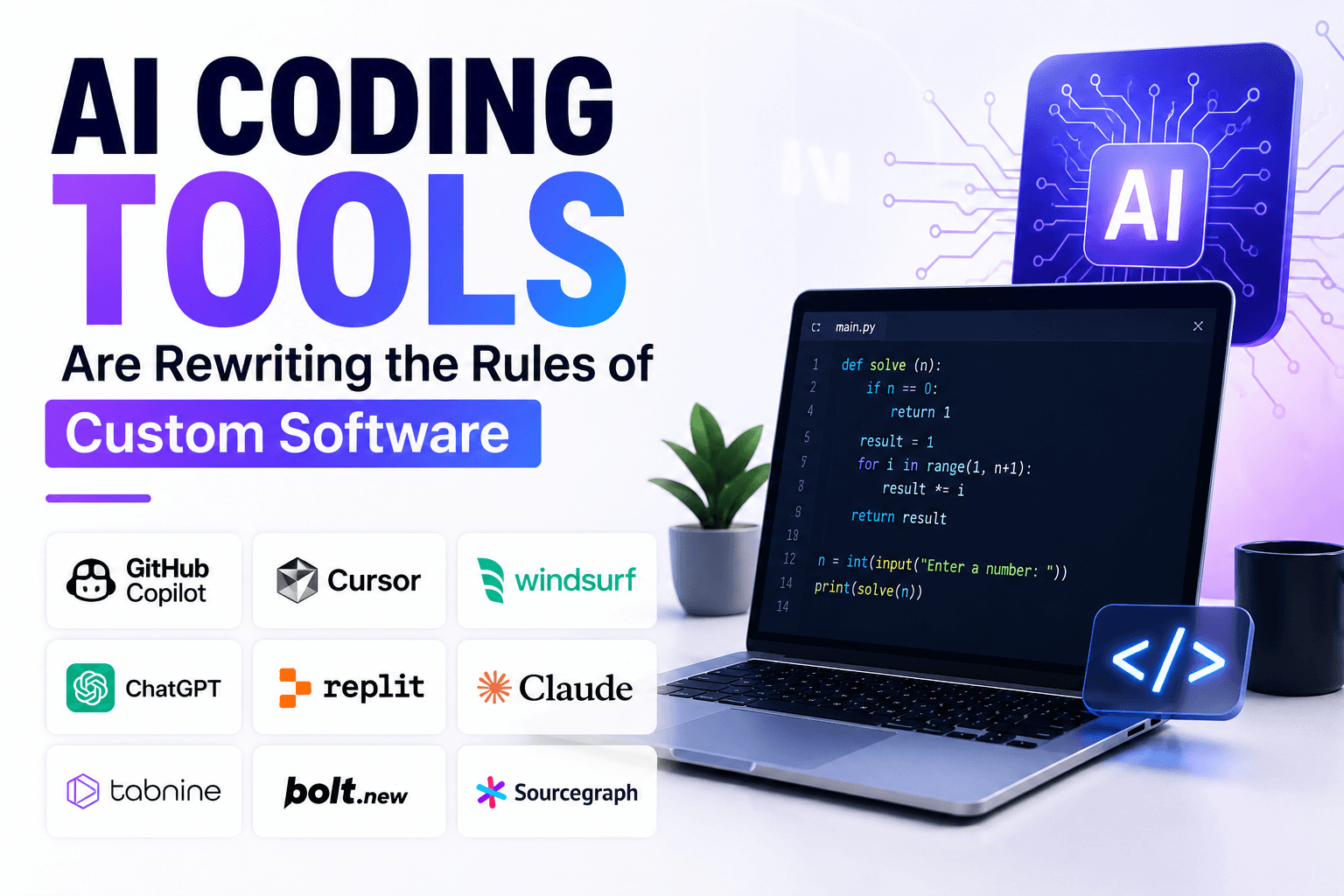
AI Coding Tools Are Rewriting the Rules of Custom Software

AI coding assistants are flipping a decades old business calculation on its head. Companies that once defaulted to buying SaaS subscriptions are now finding it cheaper and faster to build exactly what they need.

A recent wave of tools including Cursor, GitHub Copilot, and Claude Code has quietly reshaped the economics of software development. The old rule was simple: buy generic, build only when you must. That rule is cracking.

The Math Is Changing Fast

Custom software used to mean six figure budgets and six month timelines. AI coding tools are collapsing those numbers. Developers now ship features in hours that once took weeks.

The result is a fundamental shift in how smart companies think about their tech stack. A bespoke internal tool or customer portal no longer looks like a luxury purchase. It looks like the leaner option.

Businesses are waking up to a simple truth. Paying monthly for a bloated SaaS product that half fits your workflow is not saving money. It is just a slower leak.

Where This Leaves Your Brand

Off the shelf software has always forced brands into someone else's mold. Your checkout flow looks like everyone else's. Your client dashboard follows someone else's logic. That sameness is now a choice, not a constraint.

Custom built tools let a business express its brand identity at the software layer. The interface, the workflows, the micro interactions all become part of the brand experience. That is a competitive edge no SaaS subscription can offer.

The catch is that AI tools amplify speed, not strategy. Fast code without a clear design system, consistent brand voice, or thoughtful user experience just produces fast chaos. The real unlock happens when speed meets creative direction.

Brands that pair AI accelerated development with professional branding and design will pull ahead. They will ship custom tools that feel polished, intentional, and unmistakably theirs while competitors wrestle with generic dashboards.

Smart founders are already auditing their SaaS bills line by line and asking a new question. Could we build a leaner, branded version of this ourselves for less? The answer, more often than it used to be, is yes.

Published: June 23, 2026

Last updated: 2026-05-27

AI (Artificial Intelligence)AI developmentcustom softwareweb developmentSaaSbusiness strategybranded tools

Keep Reading

More from BrandMen Studio

What Happens When Your Brand Gets Its Own AI Model
Design & BrandingJune 22, 2026

What Happens When Your Brand Gets Its Own AI Model

Adobe just released Firefly Foundry, a platform that lets businesses build private generative AI models trained exclusively on their own brand assets, logos, fonts, colors, and campaign history. This is not another generic image generator. It is a custom AI designer that internalizes your brand guidelines and produces work that actually looks like you. The end of off-brand AI output Until now, feeding a prompt into an AI image tool meant crossing your fingers. You might get something beautiful. You might get something that ignores your palette entirely. Firefly Foundry flips that. The model learns from proprietary brand data. Every output references the visual language you have already spent years building. For large enterprises, this means dozens of regional teams can generate locally relevant assets that never drift from the global identity. The hidden requirement most brands will overlook Here is the catch. You can only train an AI on what exists. If your brand guidelines are scattered across old PDFs, inconsistent Canva templates, and a folder called "final_final_v3," the AI will learn chaos. A custom AI model rewards brands that have done the disciplined work, a clear design system, documented typography rules, consistent spacing logic, and a real color hierarchy. This is where a creative agency becomes essential. Before you can scale with AI, someone needs to audit your brand, tighten the system, and structure it in a way a machine can understand. At BrandMen Studio, we see this as the new baseline. A brand identity project today must be built with AI-readiness in mind. That means clean component libraries, tokenized design variables, and asset taxonomies that make sense to both humans and models. The businesses that win will be the ones that treat their brand not as a vibe but as a trainable dataset. AI will handle the velocity. Humans still own the taste, the strategy, and the judgment call on whether something feels right. If you are curious whether your brand is ready for its own AI model, start with a brand audit. The gaps will show themselves fast. And filling them is exactly what a strategic design partner does best.

Read article
Figma's New AI Tools Are Reshaping How Brands Get Built
Design & BrandingJune 21, 2026

Figma's New AI Tools Are Reshaping How Brands Get Built

The design platform that powers much of the internet just shipped something big. AI tools that generate websites, app screens, and campaign assets now live directly inside the canvas. Figma's latest release signals a shift every founder and marketing leader should pay attention to. What Figma Actually Shipped The new toolset lets designers describe what they need in plain language. The software then produces full layouts, UI components, and visual assets in seconds. Three core capabilities stand out. Turning prompts into functional site designs. Building interactive app prototypes from text descriptions. Generating on-brand marketing collateral without switching tools. This is not a splashy demo. It is a deliberate push to embed AI where creative decisions already happen. Why This Rewrites the Rules for Brands For years, the gap between a brand idea and a live website meant weeks of back and forth between teams. Figma's move shrinks that gap dramatically. A founder can now see a near-finished visual direction in hours, not days. But speed creates a new problem. When everyone can generate a decent looking page in minutes, standing out demands a sharper brand identity and a clear strategic point of view. AI can assemble pixels. It cannot invent a memorable brand voice, a distinctive visual system, or a story that connects emotionally with an audience. The brands that win will treat AI as a production accelerator, not a substitute for creative thinking. An agency like BrandMen Studio already operates at this intersection. AI speeds up wireframes, style explorations, and content variations. Human strategists and designers ensure those outputs feel intentional and unmistakable. The takeaway is simple. If you are building or refreshing a brand right now, your process should include AI powered execution but anchor itself in human-led strategy, positioning, and taste. Figma just made the production layer faster. The brands that thrive will be the ones that never confuse production speed with brand depth.

Read article
Chat with us
Chat transcript shared with our team ✓