AI (Artificial Intelligence)June 27, 20262 min read

AI Changed Everything Except Sales Here Is Why That Matters

AI Changed Everything Except Sales Here Is Why That Matters

Bain and Company just published findings that reveal a surprising split inside modern businesses. Artificial intelligence is racing through departments like marketing and back office operations. But the sales floor has barely felt the shift.

Productivity tools for writing, design, and data analysis have exploded across every industry. Yet the actual work of selling, building relationships, reading a room, and closing deals has stayed stubbornly human.

The Gap Is Wider Than Most Leaders Realize

Companies are pouring money into AI pilots across the organization. Email drafting, image generation, and customer support chatbots all hum along on machine learning now. But when a prospect needs convincing, the tech often fades into the background.

Why does this happen? Sales depends on trust. Trust is built through tone, timing, and visual presence. An automated message, no matter how clever, still feels automated. Buyers can sense it immediately.

The sales frontier remains untouched not because the tools are missing. It is because buying is an emotional act. No algorithm has cracked genuine human persuasion.

Your Brand Is the Real AI Powered Sales Engine

The businesses winning right now are not replacing their sales teams with bots. They are equipping them with sharper brand tools, cleaner websites, and smarter content pipelines that do the heavy lifting before a call ever happens.

Think of your brand identity as the pre-sale engine. When a lead lands on a site that looks credible, loads fast, and speaks clearly, half the convincing is already done. Your sales team walks into warmer conversations with prospects who already trust you.

That is where a creative and development partner earns its keep. A refined logo, a persuasive landing page, and a seamless user journey accomplish something no AI sales agent can. They make a stranger feel understood before a single word is exchanged.

At BrandMen Studio, we see this pattern every day. Founders arrive with a strong product but a digital presence that quietly undercuts their sales calls. The fix is rarely more automation. It is better storytelling, tighter design, and a site built to convert on arrival.

The Bain research points to this truth indirectly. Sales stays human because connection cannot be automated. Brands that invest in that emotional layer, through intentional design and clear messaging, will pull ahead while competitors chase the next AI plugin.

Practical next step: audit your website as if you were a first-time visitor holding a budget. Does it earn your trust in three seconds flat? If the answer is no, you have a branding and design problem, not a sales problem.

Published: June 27, 2026

Last updated: 2026-05-27

AI (Artificial Intelligence)AI in salessales strategybranding for salesB2B sales trendsdigital presencetrust and conversion

Keep Reading

More from BrandMen Studio

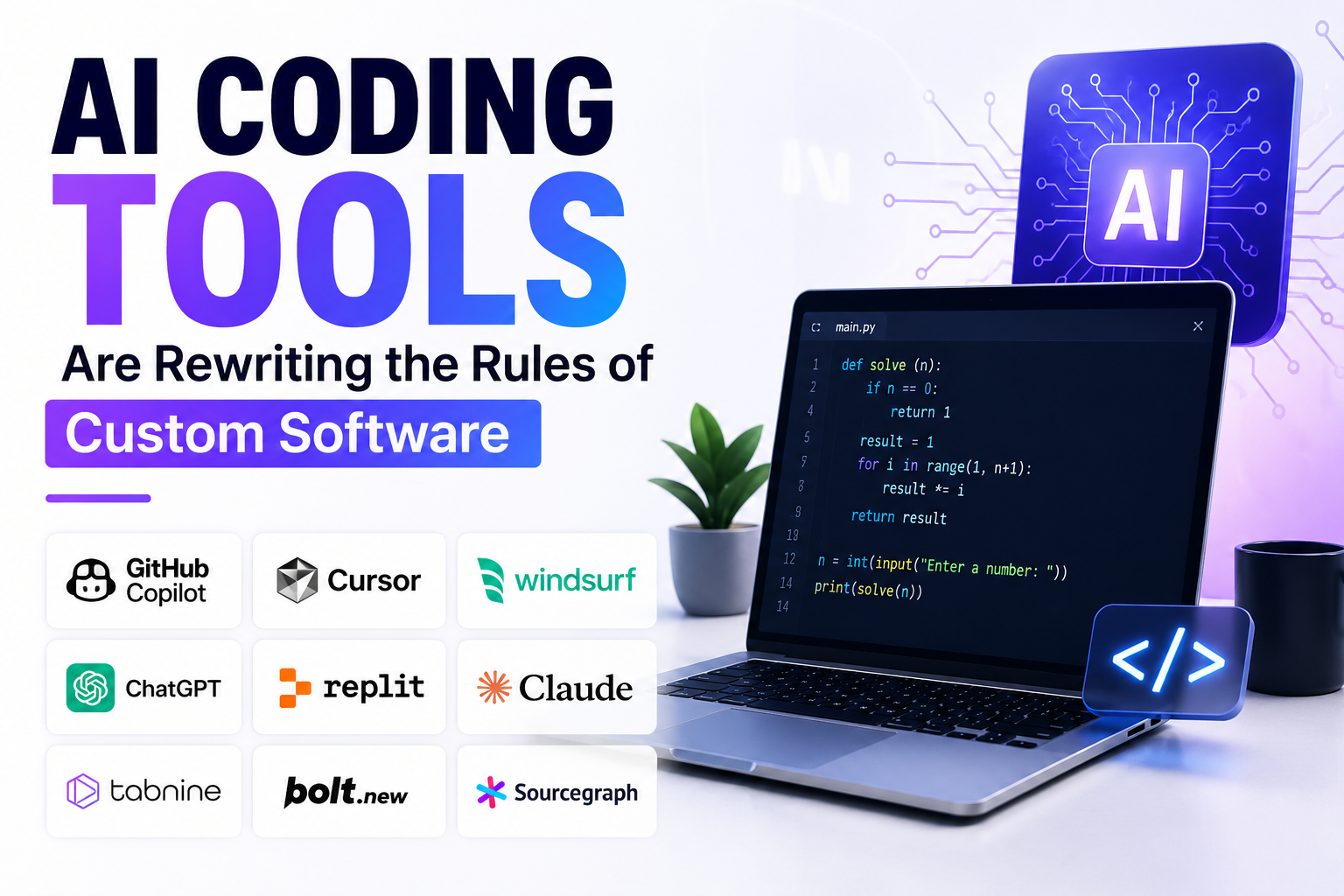
AI Coding Tools Are Rewriting the Rules of Custom Software
AI (Artificial Intelligence)June 23, 2026

AI Coding Tools Are Rewriting the Rules of Custom Software

AI coding assistants are flipping a decades old business calculation on its head. Companies that once defaulted to buying SaaS subscriptions are now finding it cheaper and faster to build exactly what they need. A recent wave of tools including Cursor, GitHub Copilot, and Claude Code has quietly reshaped the economics of software development. The old rule was simple: buy generic, build only when you must. That rule is cracking. The Math Is Changing Fast Custom software used to mean six figure budgets and six month timelines. AI coding tools are collapsing those numbers. Developers now ship features in hours that once took weeks. The result is a fundamental shift in how smart companies think about their tech stack. A bespoke internal tool or customer portal no longer looks like a luxury purchase. It looks like the leaner option. Businesses are waking up to a simple truth. Paying monthly for a bloated SaaS product that half fits your workflow is not saving money. It is just a slower leak. Where This Leaves Your Brand Off the shelf software has always forced brands into someone else's mold. Your checkout flow looks like everyone else's. Your client dashboard follows someone else's logic. That sameness is now a choice, not a constraint. Custom built tools let a business express its brand identity at the software layer. The interface, the workflows, the micro interactions all become part of the brand experience. That is a competitive edge no SaaS subscription can offer. The catch is that AI tools amplify speed, not strategy. Fast code without a clear design system, consistent brand voice, or thoughtful user experience just produces fast chaos. The real unlock happens when speed meets creative direction. Brands that pair AI accelerated development with professional branding and design will pull ahead. They will ship custom tools that feel polished, intentional, and unmistakably theirs while competitors wrestle with generic dashboards. Smart founders are already auditing their SaaS bills line by line and asking a new question. Could we build a leaner, branded version of this ourselves for less? The answer, more often than it used to be, is yes.

Read article
What Happens When Your Brand Gets Its Own AI Model
Design & BrandingJune 22, 2026

What Happens When Your Brand Gets Its Own AI Model

Adobe just released Firefly Foundry, a platform that lets businesses build private generative AI models trained exclusively on their own brand assets, logos, fonts, colors, and campaign history. This is not another generic image generator. It is a custom AI designer that internalizes your brand guidelines and produces work that actually looks like you. The end of off-brand AI output Until now, feeding a prompt into an AI image tool meant crossing your fingers. You might get something beautiful. You might get something that ignores your palette entirely. Firefly Foundry flips that. The model learns from proprietary brand data. Every output references the visual language you have already spent years building. For large enterprises, this means dozens of regional teams can generate locally relevant assets that never drift from the global identity. The hidden requirement most brands will overlook Here is the catch. You can only train an AI on what exists. If your brand guidelines are scattered across old PDFs, inconsistent Canva templates, and a folder called "final_final_v3," the AI will learn chaos. A custom AI model rewards brands that have done the disciplined work, a clear design system, documented typography rules, consistent spacing logic, and a real color hierarchy. This is where a creative agency becomes essential. Before you can scale with AI, someone needs to audit your brand, tighten the system, and structure it in a way a machine can understand. At BrandMen Studio, we see this as the new baseline. A brand identity project today must be built with AI-readiness in mind. That means clean component libraries, tokenized design variables, and asset taxonomies that make sense to both humans and models. The businesses that win will be the ones that treat their brand not as a vibe but as a trainable dataset. AI will handle the velocity. Humans still own the taste, the strategy, and the judgment call on whether something feels right. If you are curious whether your brand is ready for its own AI model, start with a brand audit. The gaps will show themselves fast. And filling them is exactly what a strategic design partner does best.

Read article
Chat with us
Chat transcript shared with our team ✓