The Vercel Breach 2026
On April 19, 2026, Vercel, the cloud platform behind Next.js and a hosting service trusted by thousands of developers worldwide including our agency, confirmed it had suffered a significant security breach.
Hackers breached Vercel's internal systems and accessed customer data, with stolen sensitive customer credentials allegedly being sold online.
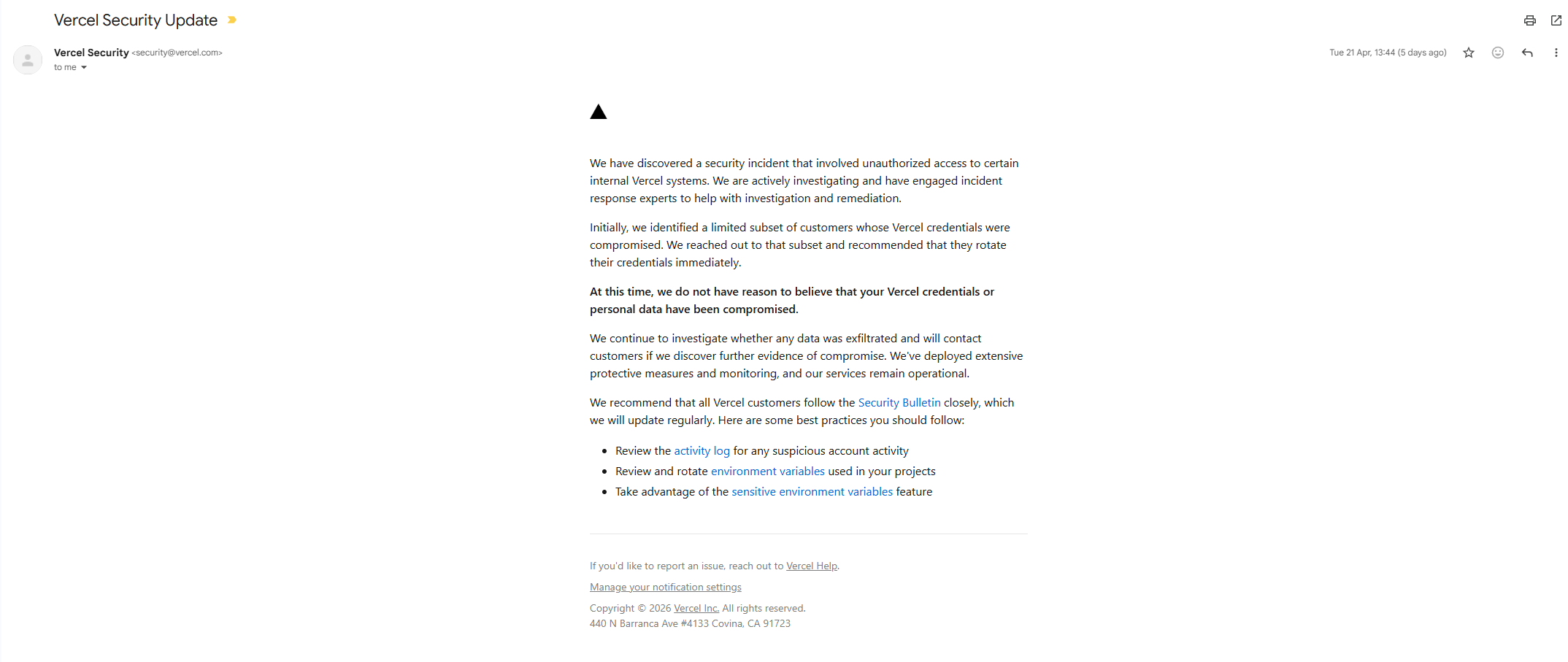
Here’s the official statement from Vercel.
For agencies like BrandMen Studio and developers who rely on platforms like Vercel for deployment and hosting, this incident serves as a critical wake-up call about the hidden risks lurking in our interconnected development ecosystems.
How It Happened?
The breach began not at Vercel, but with an unlikely victim and an even more unlikely weapon.
In February 2026, a Context.ai employee's computer was infected with Lumma Stealer malware after they searched for Roblox game exploits, a reminder that sophisticated attacks often start with simple human mistakes.
The breach originated from Context AI, where one of Vercel's employees downloaded an app and connected it to their corporate Google account.
The hackers exploited this OAuth connection to hijack the employee's account and pivot into Vercel's infrastructure.
The Real Danger: Unencrypted Environment Variables!
What makes this breach particularly concerning is what the attackers found once inside.
The attacker was able to enumerate and decrypt non-sensitive environment variables, those API keys, database credentials, and tokens that developers often store without marking them as "sensitive."
The hackers claimed to be selling access keys, source code, and database data allegedly stolen from Vercel, along with access to internal deployments and API keys, with some reports suggesting the data was offered for $2 million on underground forums.
Why This Matters for Your Agency?
This wasn't just a Vercel problem. it's a supply chain problem that affects the entire web development ecosystem.
Here's what makes it significant:
- OAuth Trust Relationships: Third-party integrations you trust can become backdoors into your systems
- Default-Insecure Configurations: Secrets that aren't explicitly marked as sensitive may not be encrypted
- Lateral Movement: Once attackers compromise one system, they can pivot to others
Vercel CEO Guillermo Rauch noted the sophistication of the attack, stating that the attackers moved with velocity and deep understanding of Vercel's systems, possibly aided by AI.
What You Should Do Right Now
If you're hosting projects on Vercel or similar platforms, here are immediate actions to take:
1. Enable Two-Factor Authentication Add an extra layer of security to all your accounts, especially those connected to deployment platforms.
2. Review and Rotate Your API Keys Environment variables that were not marked as "sensitive" should be treated as potentially exposed and rotated as a priority.
3. Mark Secrets as Sensitive Go through your environment variables and ensure all sensitive data (API keys, database URLs, tokens) are explicitly marked as "sensitive" to ensure encryption at rest.
4. Audit Third-Party Integrations Review all OAuth apps and third-party tools connected to your Google Workspace, GitHub, and other development accounts.
5. Check for Suspicious Activity Review your logs for any unusual access patterns or unauthorized changes to your deployments.
The Bigger Picture
This breach joins a growing list of supply chain attacks targeting developer tools and cloud platforms.
The interconnected nature of modern development, where we rely on dozens of services, packages, and integrations, means a compromise in one area can cascade across the entire ecosystem.
For agencies and development teams, the lesson is clear: security can no longer be an afterthought.
Every integration point, every third-party tool, and every environment variable is a potential attack vector.
Moving Forward
While Vercel has confirmed that no npm packages published by Vercel have been compromised and the supply chain remains safe, the incident reminds us that platform security is a shared responsibility between providers and users.
At BrandMen Studio, we're taking this opportunity to review our own security practices and strengthen our deployment workflows. We recommend all agencies and developers do the same.
Stay vigilant, rotate your keys, and remember: in 2026, even Roblox cheats can lead to million-dollar breaches.
Published: April 21, 2026
Last updated: 2026-05-27